The History of the House of the Virgin Mary: Discovery, Faith, and Legacy
The full history of the House of the Virgin Mary near Ephesus: its discovery, the vision that led to it, papal visits, and its significance today.
Loading...


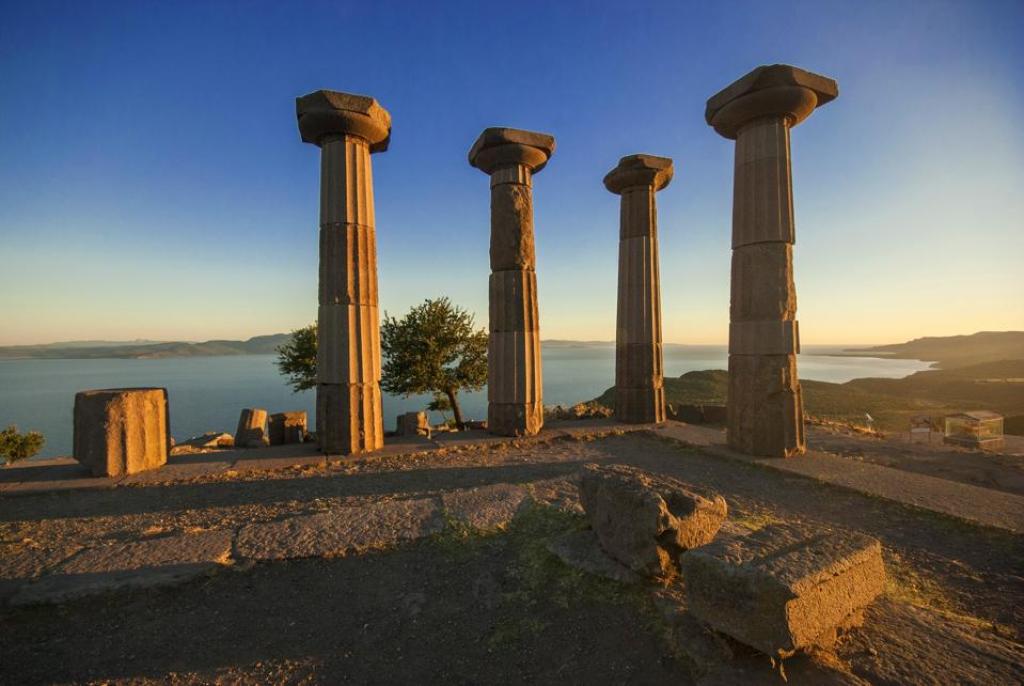
Perched high above the Aegean Sea, on Türkiye’s northwestern coast, lies a village that seems to exist outside of time — Assos, also known as Behramkale.
Table of contents [Show]
Perched high above the Aegean Sea, on Türkiye’s northwestern coast, lies a village that seems to exist outside of time — Assos, also known as Behramkale.
This ancient settlement, with its cobblestone streets, stone houses, and sweeping sea views, is where history, philosophy, and tranquility converge.
Over 2,000 years ago, philosophers walked these same cliffs. Today, travelers do the same — not to teach or debate, but to breathe, reflect, and reconnect with the essence of life.
Assos isn’t just a place to visit; it’s a place to pause.
Assos was founded in the 7th century BCE by settlers from Lesbos Island, just across the turquoise waters.
Soon, it became a thriving port and an important center of learning.
Its most famous resident? Aristotle — who lived and taught here for several years after leaving Plato’s Academy in Athens.
He even married Pythias, the adopted daughter of the city’s ruler.
Imagine standing at the top of the hill, gazing at the same horizon that once inspired the philosopher’s ideas on nature and existence.
At the heart of ancient Assos stands the Temple of Athena, built around 530 BCE.
Its columns, though weathered by centuries of wind, still command awe.
From here, the panoramic view stretches across the Aegean Sea, all the way to Lesbos — a view that feels both earthly and divine.
Modern-day Assos is known locally as Behramkale, a traditional Turkish village built with the same gray volcanic stone as the ancient ruins.
Walking through its narrow lanes feels like stepping into a living museum.
Stone houses, boutique hotels, and tiny cafés line the slopes.
Cats nap on sun-warmed steps, olive trees sway gently, and the air smells faintly of thyme and sea salt.
At the village’s edge, the Ottoman-era bridge over the Tuzla River still connects travelers to the harbor below — a reminder that this has always been a place of passage and meeting.
Descending from the hilltop village, you reach the Assos harbor, a picturesque cove dotted with fishing boats and seaside taverns.
Once a bustling trade port, today it’s a place for peaceful reflection.
Wooden piers stretch into the calm water, while stone hotels and seafood restaurants glow under strings of lights as the sun sets.
Locals gather for tea, fishermen mend their nets, and the rhythm of the waves replaces the rush of time.
Order a plate of grilled calamari or fresh sea bream, and let the night unfold slowly, the Aegean breeze carrying stories from distant shores.
There’s a reason Assos feels different from other coastal towns — it carries an intellectual calm.
It’s not just beautiful; it’s thoughtful.
Standing among the temple ruins, you sense why philosophers chose this place.
The blend of sea, stone, and silence invites introspection.
Even modern visitors describe a strange serenity — as if the ancient wisdom of the land still lingers in the wind.
It’s a rare destination where you can hear your own thoughts again.
The crown jewel of Assos, the temple stands atop the acropolis, overlooking the Aegean.
Visit during sunrise or sunset — when the columns glow golden, and the sea turns silver-blue.
It’s one of Türkiye’s most cinematic views.
Wander through the remnants of the city’s fortifications and the Hellenistic theater, carved into the hillside.
From the upper seats, you’ll see both the ruins and the sea — a natural amphitheater of history and beauty.
Built in the 14th century by the Ottoman Emir of Karasi, this small stone mosque blends seamlessly with the ancient ruins, symbolizing continuity between civilizations.
A perfect place for a long lunch, a swim, or a quiet evening drink.
Stay overnight in one of the small hotels here for a truly peaceful Aegean night.
Lesbos Island (Midilli): Visible across the sea, accessible by ferry from Ayvalık or Dikili.
Kadırga Bay: A sandy beach just 2 km from Assos, ideal for swimming and sunbathing.
Troya (Troy): The legendary city of Homer’s Iliad lies just 90 minutes away.
Assos lies in the heart of Türkiye’s olive country.
The hills around the village are blanketed with olive trees that produce some of the region’s finest cold-pressed oils.
Locals take pride in their olive harvests — and you’ll taste that pride in every dish.
Don’t miss:
Zeytinyağlı dishes (olive oil–based appetizers)
Fresh Aegean fish grilled with herbs
Homemade jams made from local figs and quince
And of course, Turkish coffee served slowly, as the sea sparkles below.
The village’s pace invites you to slow down too — meals stretch into hours, and every conversation is unhurried.
Assos changes gently with the seasons, each bringing its own magic:
Spring: Wildflowers bloom among the ruins; perfect hiking weather.
Summer: Warm, breezy days ideal for swimming and seaside dining.
Autumn: Harvest season — the scent of olives and the softest sunsets.
Winter: Quiet, misty, and poetic; a favorite time for writers and photographers.
No matter when you visit, the stillness of Assos endures.
By Car: About 1.5 hours from Çanakkale or 4 hours from İzmir.
By Bus: Regular routes run to Ayvacık, from where minibuses reach Behramkale.
By Air: The nearest airports are Edremit Koca Seyit (EDO) and Çanakkale Airport (CKZ).
Assos is best explored on foot — the village streets are narrow, and every corner reveals a new view worth lingering over.
Assos offers charming boutique hotels and stone guesthouses that blend history with comfort.
Assos Dionysos Hotel: Luxury with sea views and infinity pool.
Assos Behram Hotel: Right by the harbor, ideal for evening walks.
Nazlıhan Hotel: Converted from an old olive oil mill — full of rustic character.
For a more local experience, stay in a small pansiyon in the upper village and wake to the call of roosters and the scent of baked bread.
Some destinations dazzle; others whisper.
Assos whispers — softly, wisely, like a memory from another life.
You walk through ruins that once hosted philosophers, dine in taverns by the same sea, and realize that very little has changed.
The stones have aged, but the spirit remains — grounded, patient, serene.
In an age of constant motion, Assos offers what we all seek but rarely find: stillness with meaning.
Here, history doesn’t end in a museum; it lives quietly, in every sunset, every olive tree, every echo of the sea below.
Assos is not just a destination — it’s a dialogue between the past and the present.
It teaches you that wisdom isn’t only found in books, but also in the calm of the sea, the resilience of stone, and the rhythm of village life.
Come for the ruins, stay for the silence, and leave with something Aristotle himself might have called eudaimonia — the quiet happiness of a life well-lived.

The full history of the House of the Virgin Mary near Ephesus: its discovery, the vision that led to it, papal visits, and its significance today.
The best Kusadasi tours to Ephesus and the House of the Virgin Mary: tour options, timing, cruise passenger tips, and how to choose the right excursion.
Ephesus & House of the Virgin Mary : openıng hours, best tıme to vısıt, and how to see both sıtes ın one day from kuşadası