The History of the House of the Virgin Mary: Discovery, Faith, and Legacy
The full history of the House of the Virgin Mary near Ephesus: its discovery, the vision that led to it, papal visits, and its significance today.
Loading...


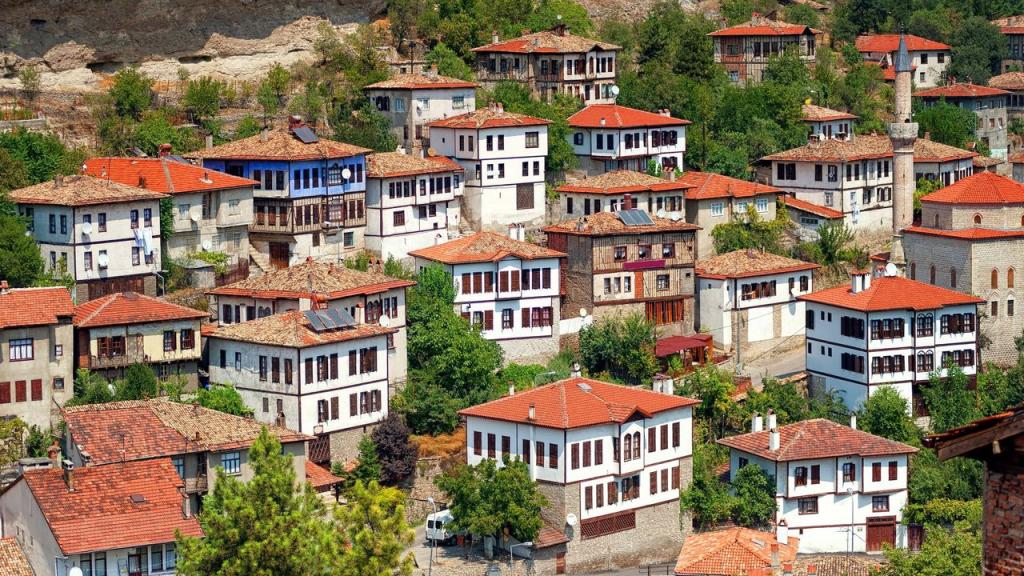
Hidden in the green valleys of northern Türkiye lies a place where time hasn’t forgotten to breathe — Safranbolu
Table of contents [Show]
Hidden in the green valleys of northern Türkiye lies a place where time hasn’t forgotten to breathe — Safranbolu.
A UNESCO World Heritage Site since 1994, Safranbolu is a perfectly preserved Ottoman town, a masterpiece of wooden architecture and cultural memory.
Strolling through its cobblestone alleys feels like stepping into the 18th century — where the scent of safran (saffron) fills the air, and every house tells a story of merchants, travelers, and artisans who once shaped this elegant town.
In a world obsessed with modern speed, Safranbolu stands as a gentle reminder of beauty in balance — heritage, craftsmanship, and calm.
Located in Karabük Province, about 200 kilometers north of Ankara, Safranbolu takes its name from the world’s most precious spice — saffron, once grown abundantly in the region and traded across the Silk Road.
Its geography gave it power; its architecture gave it soul.
From the 13th century Seljuks to the 19th century Ottomans, the town was an important stop for caravans traveling between Istanbul and the Black Sea.
Yet unlike many historical towns, Safranbolu didn’t lose its spirit. Instead, it evolved gracefully, keeping its wooden mansions, stone bazaars, and Turkish baths intact — a living museum rather than a frozen relic.
Safranbolu’s fame rests on its traditional Ottoman houses, nearly 2,000 of which remain in excellent condition today.
Built with stone bases, timber frames, and white plastered walls, these homes reflect the perfect harmony between nature, design, and daily life.
Each mansion was crafted not only for beauty but for privacy, comfort, and hospitality — values deeply rooted in Turkish culture.
Every house opens into a shaded courtyard — a private world hidden from the street. Inside, rooms surround a central hall (sofa), with wooden ceilings, carved cupboards, and colorful carpets.
The divan area, often by the window, invites guests to sit, drink tea, and watch life unfold slowly below.
Visiting a house like Kaymakamlar Evi, now a museum, reveals how artistry shaped even the simplest details — from copper utensils to ceiling engravings.
Safranbolu was once a center of trade and craftsmanship, famous for leather goods, ironworks, and copper artistry.
You can still hear the rhythmic hammering of artisans in the Demirciler (Blacksmiths’) Bazaar or the scent of tanned leather in the Yemeniciler Arastası, where shoemakers continue traditions older than memory.
In the Köprülü Mehmet Paşa Caravanserai, now turned into a hotel and café, travelers once rested with their camels and cargo.
Today, tourists sit in the same courtyard, sipping Turkish coffee beneath stone arches that have witnessed centuries of stories.
Safranbolu’s name is not just symbolic — saffron truly defined its identity.
Locals still grow and harvest this golden spice in nearby villages such as Davutobası and Yörük Köyü, where each flower yields just a few delicate strands.
You can taste it in saffron tea, saffron Turkish delight, and even saffron ice cream — subtle, floral, and unlike anything else in the world.
In autumn, during harvest season, fields turn purple and gold, and the air carries a sweet, earthy scent — the fragrance of a heritage still alive.
A short drive from the town center lies Yörük Köyü, an open-air museum of rural Turkish life.
This small village, with its untouched wooden houses and quiet lanes, offers an even older glimpse of Ottoman domestic architecture.
Women still bake flatbread in outdoor ovens, men carve spoons and furniture by hand, and children play in stone courtyards.
Visitors are often invited for tea — not as customers, but as guests.
It’s here that you truly understand Safranbolu’s secret: heritage is not preserved in buildings, but in people.
For the best view of Safranbolu’s terracotta rooftops, climb to the Hıdırlık Hill, where the historic clock tower has been keeping time since the early 1800s.
From here, the town spreads out like a painting — red roofs, white walls, and the domes of mosques nestled among green hills.
At sunset, the sky turns golden, and the call to prayer echoes softly over the valley.
It’s a moment of quiet reverence — timeless and deeply moving.
No Ottoman town was complete without its hamam (Turkish bath), and Safranbolu preserves two of the finest examples: the Cinci Hamam and the Tarihi Tokatlı Hamamı.
Built in the 17th century, Cinci Hamam offers a genuine, old-world experience — marble interiors, hot steam, and traditional scrubbing sessions that leave travelers both cleansed and restored.
Afterward, many relax with mint tea or sherbet in the small café next door, a ritual unchanged for 400 years.
Another architectural gem is the Cinci Han, built by a wealthy Ottoman merchant in the mid-1600s.
The structure served as both an inn and a trading hub, its massive stone walls symbolizing Safranbolu’s prosperity.
Today, its arched courtyards and corridors host art exhibitions and local events — a perfect blend of history and modern creativity.
Safranbolu’s cuisine is a reflection of its geography — Black Sea freshness meets Anatolian heartiness.
Must-try local dishes include:
Perohi: Handmade dumplings filled with minced meat or cheese, similar to mantı.
Bükme: A savory pastry stuffed with spinach and herbs.
Safranbolu lokum (Turkish delight): Flavored with saffron or rosewater.
Etli yaprak sarma: Grape leaves stuffed with meat and rice, served with yogurt.
And don’t miss the local grape molasses or homemade pekmez, often sold by villagers along the road.
Safranbolu celebrates its cultural richness with annual festivals that bring life to its quiet streets:
Safranbolu International Golden Saffron Documentary Film Festival (September): A global event honoring cultural heritage and storytelling.
Saffron Harvest Festival (October): Visitors can join locals in collecting the spice and enjoy music, food, and village fairs.
These events keep the town’s traditions alive while opening them to the world.
Accommodation in Safranbolu blends comfort with heritage.
Many of the old Ottoman houses have been converted into boutique hotels, each preserving the original architecture while offering modern amenities.
Gulevi Safranbolu: A beautifully restored mansion with a garden and authentic decor.
Zalifre Hotel: Centrally located, ideal for exploring the old bazaar.
Cinci Han Hotel: Stay within a historic caravanserai — an experience in itself.
Every morning, expect a traditional Turkish breakfast served with homemade jams, olives, and strong black tea.
By Car: 2.5 hours from Ankara, 4 hours from Istanbul.
By Bus: Regular services from major Turkish cities to Safranbolu’s terminal.
Nearest Airport: Zonguldak or Ankara Esenboğa Airport, followed by a short drive.
Once there, most attractions are within walking distance, and the best way to explore is simply by wandering.
Spring (April–June): The town blooms with flowers, ideal for photography.
Autumn (September–October): Saffron harvest season, with mild weather and golden colors.
Winter: Quiet and atmospheric, with snow-dusted rooftops adding to the fairytale charm.
Safranbolu is enchanting year-round — each season offering its own rhythm of calm and beauty.
Safranbolu is not a place to rush through — it’s a place to listen.
Listen to the creak of wooden floors, the hum of artisans’ tools, the gentle voice of history carried by the wind.
It invites you to slow down, breathe, and reconnect with a world where human hands built beauty not for fame, but for life itself.
In the end, you leave Safranbolu not with souvenirs, but with something more lasting — a feeling that grace and simplicity still exist, if only you pause long enough to see them.

The full history of the House of the Virgin Mary near Ephesus: its discovery, the vision that led to it, papal visits, and its significance today.
The best Kusadasi tours to Ephesus and the House of the Virgin Mary: tour options, timing, cruise passenger tips, and how to choose the right excursion.
Ephesus & House of the Virgin Mary : openıng hours, best tıme to vısıt, and how to see both sıtes ın one day from kuşadası