The History of the House of the Virgin Mary: Discovery, Faith, and Legacy
The full history of the House of the Virgin Mary near Ephesus: its discovery, the vision that led to it, papal visits, and its significance today.
Loading...


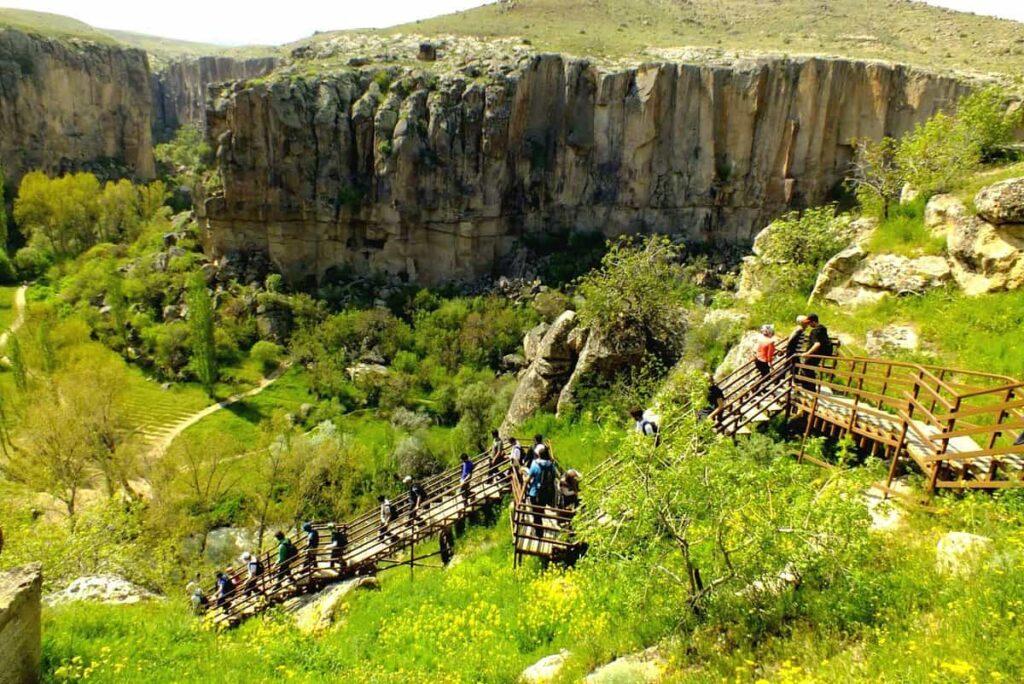
Deep in the heart of Central Anatolia, carved by the gentle yet persistent hands of the Melendiz River, lies one of Türkiye’s most breathtaking natural wonders: Ihlara Valley.
Table of contents [Show]
Deep in the heart of Central Anatolia, carved by the gentle yet persistent hands of the Melendiz River, lies one of Türkiye’s most breathtaking natural wonders: Ihlara Valley.
Often overshadowed by the fairy chimneys of nearby Cappadocia, Ihlara is a world of its own — a place where nature, history, and spirituality intertwine in perfect balance.
It’s a 14-kilometer-long gorge that has witnessed centuries of faith, solitude, and quiet devotion.
As you walk through its green corridor, surrounded by sheer rock walls and the sound of flowing water, you’re not just hiking through a canyon — you’re traveling through time.
Millions of years ago, volcanic eruptions from Mount Hasan blanketed the region in layers of ash and lava, forming the soft tuff stone characteristic of Cappadocia.
Over time, the Melendiz River carved its way through this volcanic rock, creating a deep canyon that now reaches up to 150 meters in depth.
Today, the valley stands as a masterpiece of erosion — a living testament to nature’s artistry.
But while the landscape tells a geological story, its caves, frescoes, and chapels whisper a much deeper one: the story of faith.
From the early centuries of Christianity, Ihlara Valley became a refuge for monks, hermits, and worshippers fleeing Roman persecution.
They found in these cliffs not just shelter, but silence — the perfect setting for contemplation and prayer.
Dozens of rock-cut churches, monasteries, and dwellings were carved directly into the canyon walls, many still adorned with vivid Byzantine frescoes that have survived over a thousand years.
Among the most famous:
Ağaçaltı Church (Church under the Tree): Known for its detailed depictions of the Ascension and Christ Pantocrator.
Pürenliseki Church: Unique for its multi-level architecture and frescoes showing the life of Jesus.
Sümbüllü Church: Recognized for its elegant dome and blue-toned frescoes.
Yılanlı Church (Snake Church): Named after a vivid fresco of sinners tormented by serpents — a visual sermon in stone.
Walking from one church to another feels like turning the pages of a spiritual manuscript etched into rock.
Beyond its sacred past, Ihlara Valley is an oasis of green in the arid landscape of Cappadocia.
The river that formed it still flows quietly, lined with poplar trees, willows, and wildflowers.
Birdsong echoes off the canyon walls, and butterflies flutter between fig trees and ivy-covered rocks.
It’s no wonder many call it “Cappadocia’s hidden paradise.”
Even on the hottest summer days, the valley remains cool and shaded — a welcome contrast to the open plains above.
The Ihlara to Selime hiking route offers travelers an immersive way to experience the valley’s beauty and history.
Along the 14-kilometer trail, small bridges cross the river, cave dwellings peek from the cliffs, and ancient chapels hide behind bends in the path.
Three small settlements mark the valley’s edges — Ihlara, Belisırma, and Selime.
Each offers a glimpse into authentic Anatolian life.
In Belisırma, riverside restaurants serve local trout freshly caught from the Melendiz River. You can enjoy your meal seated on low platforms over the water, with your feet nearly touching the stream.
Selime, at the end of the valley, is home to the Selime Monastery — the largest religious complex in Cappadocia, carved straight into volcanic rock.
Its cathedral-sized chapel, kitchen, and monk quarters make it one of the most impressive monastic sites in Türkiye.
Locals here are warm and hospitable, always ready to offer fresh gözleme (Turkish pancake) and herbal tea to passing travelers.
Whether you’re a hiker, a photographer, or a spiritual seeker, Ihlara offers something personal and profound.
For Nature Lovers: The trail is a gentle yet scenic hike, with birds, trees, and the constant murmur of the river accompanying you.
For History Enthusiasts: Each church and carving tells a unique story — one of devotion, survival, and artistry.
For Spiritual Travelers: The silence of the valley is meditative. Sitting beneath its cliffs, listening to the wind, many visitors describe a sense of deep peace, as if the valley itself is praying.
In this canyon, faith feels natural, and nature feels sacred.
Ihlara Valley can be visited year-round, but the best seasons are spring and autumn.
Spring (April–June): Wildflowers bloom, and the valley bursts with life.
Autumn (September–November): The golden leaves and soft light make for unforgettable photography.
Summer: Warm but still cool within the canyon.
Winter: Quiet and mystical, though parts of the trail may be slippery.
The temperature difference between the valley floor and the plateau above can reach up to 10°C — a reminder of how unique this microclimate is.
Entry Points: The main entrances are at Ihlara Village and Selime Monastery.
Trail Distance: 14 km (can be done in sections; the most popular route is 4 km from Ihlara to Belisırma).
Duration: Around 3–4 hours for the full trail, depending on stops.
Footwear: Comfortable hiking shoes are essential — some stairs are steep and uneven.
Guides: Local guides are available at the entrances and can enrich your visit with historical context.
For those who prefer a lighter experience, short circular routes are also available near Ihlara and Belisırma.
By Car: Ihlara is about 90 minutes from Göreme or 1 hour from Aksaray.
By Tour: Many Cappadocia tours include Ihlara Valley as part of a full-day itinerary alongside the Derinkuyu Underground City and Selime Monastery.
By Public Transport: Minibuses run from Aksaray to Ihlara Village, but private transfers are recommended for flexibility.
Selime Monastery: The grand finale of the valley, with panoramic views and monumental rock-cut halls.
Derinkuyu Underground City: One of the largest subterranean settlements in Cappadocia, where early Christians once hid from invaders.
Mount Hasan: Offers challenging hikes and stunning vistas over the region.
Güzelyurt: A charming old town filled with stone houses and Greek Orthodox heritage.
Each site complements the valley’s story — turning a day trip into a full journey through faith and history.
What sets Ihlara apart is its balance — between human and divine, between stone and stream.
It’s not as dramatic as Cappadocia’s fairy chimneys, nor as crowded.
Instead, it offers a quiet, intimate beauty that seeps into you slowly.
You walk in thinking it’s just a hike.
You leave feeling you’ve been part of something sacred.
The monks may be gone, the frescoes faded, but the valley still hums with the same ancient peace that once drew them here.
In every birdcall and every ripple of the river, you can still hear the echo of centuries-old prayers.
Ihlara Valley is not just a destination — it’s a meditation carved in stone.
It’s where faith, nature, and history live side by side, untouched by time.
Whether you visit for its spiritual heritage or its sheer natural beauty, one truth becomes clear: the divine is in the details — in the curve of the canyon, the color of the sky, the quiet of the river.
When you leave Ihlara, you don’t just carry memories.
You carry a kind of stillness — a reminder that sometimes the most sacred journeys are the ones that lead inward.
The full history of the House of the Virgin Mary near Ephesus: its discovery, the vision that led to it, papal visits, and its significance today.
The best Kusadasi tours to Ephesus and the House of the Virgin Mary: tour options, timing, cruise passenger tips, and how to choose the right excursion.
Ephesus & House of the Virgin Mary : openıng hours, best tıme to vısıt, and how to see both sıtes ın one day from kuşadası